Showing posts with label Stem Cells. Show all posts

Friday, 17 July 2015

Processing of Umbilical Cord Blood | What happens in lab

Once the umbilical cord blood get collected immediately after the delivery , it then reached the lab where the processing of the blood gets starts for extracting out the desired stem cells which are of use.

Since the blood is very crucial and if not processed in time may turns into clot and is of no use afterwards, due to which the it is very essential to proceed with the processing of blood as soon as possible

Generally blood consist of many different types of cells namely Red Blood Cells (RBC's), White Blood Cell(WBC's), Platelets, Hematopoetic Stem Cells (HSC's) and plasma and the main motive behind cord blood processing is the extraction of Hematopoetic Stem Cells (HSC's) only and discarding the remains.

Process of Umbilical Cord Blood processing


Initially the sample get inspected and reviewed.Then technicians will proceed with processing.
Please find below the flow chart and explanation for each method  of cord blood processing :
Methods of Umbilical Cord Blood Processing
Fig 1: Methods Of Umbilical Cord Blood Processing

Manual methods of Umbilical Cord Blood Processing
1.Density Gradient solution - This process involves separation of different layers of blood components based  on the principle of gravity using the centrifuge. Once the blood gets separated in to the layer,one layer will be buffy coat which is of use as it contains stem cells and rest will be discarded.It is necessary to make sure that there will not be the presence of even a single red blood cells because having so will restrict the sample usage to the donor only and will produce toxic effects or rejection if used by a different recipient.
Recovering Stem Cells from Cord Blood
Fig 2 : How Density gradient will lead to separation of buffy coat.
2.Hydroxyethyl Starch Solution -It is a process of recovering stem cells by red blood cells depletion.This further involve manual separation of white blood cells by sedimentation with chemical hetastarch to ensure that cord blood units which are being extracted are on an average 99 % pure.
Automated methods of Umbilical cord Blood Proessing
1. AXP - It stands for AutoXpress Platform, which is functionally a closed and fully automatic system for the processing of cord blood and extracting the stem cells.It is an integral component of CBR's proprietary Cell Advantage system. CBR has the highest published average stem cells recovery rate of 99% which is considered best in the the industry.

*AXP and AutoXpress are registered trademarks of Cesca Therapeutics.
2. Prepacyte CB - This process involves red blood cell depletion upto 99% and leads to highest recovery of Colony forming units (CFU),which in a general sense are the stem cells which are used for the treatment of the patient.Discarding all the red blood cells from the blood is very essential which will results in less toxic effects post the treatment.
3. SEPAX  and SEPAX 2 - Both are the fully automated closed system system for the efficient and consistent processing of umbilical cord blood. Both the devices belongs to Biosafe SA .However SEPAX 2 is highly advanced as compared to SEPAX.

Check the difference between sepax and sepax 2.

There are many companies which deals with the cord blood processing and different technique is being used by each of them for the processing and recovery of stem cells however choosing the right technique and using it in a right way is all what is important for getting the stem cells which will be useful for the mankind.

Sunday, 31 May 2015

Using Stem Cells to treat Diseases

Cord blood stem cells has been extensively  used for therapies as compared to any other sources of stem cells due to its ready availability and nascent  nature which provides better results post transplant therapy.Apart from this it require the lesser matching (HLA matching) for a therapy using cord blood stem cells as compared to other sources of haemopoetic stem cells it minimises the risk associated with the transplant and making it the best option available for the therapist to use.

Around 25 years ago, the first human transplant using umbilical cord blood stem cells was performed.At the time, treatment of only one disease was possible by using cord blood stem cells.Today, cord blood stem cells can be used in the treatment of nearly 80 diseases and the list continues to develop.

Cord blood stem cells have proven track records on treatment of diseases like Thalassemia, Leukemia, Anaemia, Cerebral Palsy, Diabetes and various blood disorders, bone marrow syndromes, cancers, hemoglobinopathies, Immunodeficiencies, metabolic disorders.

Further more than 300 diseases and conditions are in research progressing towards positive results.


Reference : http://www.healthyhearing.com/report/51792-Study-uses-cord-blood-stem-cells-in-hearing-loss-treatment

New medical technology may well use these cells to  cardiac tissue, repair damage due to stroke or spinal cord injuries and reverse the effects of such diseases as multiple sclerosis or parkinson's.While the research is still in its early stages, the possibilities are extremely promising.And, banking your child's stem cells increases access to any of these technologies in the future.

Saturday, 23 May 2015

History of Cord Blood and Transplantation

Details of how stem cells came into existence :

1974

First reports on the presence of stem/progenitor cells in human cord blood.

1983

Dr. Hal Broxmeyer and colleagues are the first to propose the concept of using umbilical cord blood as an alternative source of stem cells to bone marrow for transplant. Dr. Broxmeyer and colleagues create the first "proof of principle" cord blood bank.

1988

The first successful cord blood transplant in the world is performed, by Dr. Eliane Gluckman of St. Louis Hospital, Paris, France on a five-year-old boy, Matthew Farrow, suffering from Fanconi’s Anemia (a blood disorder). The cord blood is collected at Matthew’s sister’s birth and is stored by Dr. Broxmeyer. Matthew’s U.S. physician is Dr. Joanne Kurtzberg.

1989

Dr. Broxmeyer publishes seminal paper in the Proceedings of the National Academy of Sciences that shows that cord blood has similar attributes as bone marrow, contains an enriched source of stem/progenitor cells, and suggests cord blood as a possible alternative source to bone marrow in transplantation.

1989

Dr. Gluckman publishes report of the first successful cord blood transplant in the New England Journal of Medicine.

1990

World's first cord blood transplant for the treatment of leukemia is performed by Dr. John Wagner at the University of Minnesota.

1992

The National Institutes of Health's (NIH) Blood Disease Program at the National Heart, Lung and Blood Institute, under the direction of Dr. Alan Levine, initiates the first federally funded cord blood banking program with Dr. Pablo Rubinstein at the New York Blood Center.

1993

The world's first unrelated cord blood transplant is performed by Dr. Kurtzberg at Duke University Medical Center.

1996

Dr. Kurtzberg publishes the results of her first 25 cord blood transplant patients in the New England Journal of Medicine.

1996

The first FDA approved study with cord blood is sponsored by the National Institutes of Health / National Heart Lung and Blood Institute. The principal investigator of the Cord Blood Transplantation Study (COBLT) is Dr. Kurtzberg.

1997

Stephen Sprague, who is diagnosed with chronic myelogenous leukemia, becomes one of the early adult patients to be cured with a cord blood transplant.

1997

A study is published by Dr. Gluckman in the New England Journal of Medicine reviewing survival rates of patients receiving cord blood transplants and comparing results of related and unrelated transplants.

1998

Keone Penn becomes the first person in the world with sickle cell disease to be successfully treated with a cord blood transplant. The transplant is performed at Emory University Department of Pediatrics.

1998

Dr. Rubinstein of the New York Blood Center and Dr. Kurtzberg publish a landmark analysis of the first 562 cord blood transplant patients in the New England Journal of Medicine. The analysis concluded that cord blood is a useful source of allogeneic hematopoietic stem cells for bone marrow reconstitution for patients with leukemia.

2001

A study is published in the New England Journal of Medicine by Dr. Mary Laughlin that indicates that cord blood is a suitable alternative to bone marrow for treatment of adults with diseases treatable with a stem cell transplant. Drs. Wagner and Kurtzberg are two of the investigators in this study.

2003

Dr. Broxmeyer publishes a report in the Proceedings of the National Academy of Sciences of cord blood cryogenically stored from 1985 to be viable after 15 years.

2003

A U.S. Food and Drug Administration Advisory Panel is created to consider developing guidelines for licensure of cord blood banking and transplantation.

2004

The U.S. Institute of Medicine begins a year-long study to make recommendations for a national cord blood program.

2004

Illinois becomes first state to enact legislation supportive of cord blood banking.

2004-
2005

Researchers confirm that pluripotent stem cells are present in cord blood thus indicating the possible use of cord blood for the treatment of diseases other than those of blood origin.

2005

It is estimated that more than 6,000 cord blood transplants have been performed worldwide.

2005

The United States Congress passes the Stem Cell Therapeutic and Research Act of 2005. The legislation provides funding for qualified cord blood banks to create a national cord blood inventory.

2005

Dr. Kurtzberg and colleagues report success with transplanting children with inherited metabolic disorders with cord blood.  One of their studies, published in the New England Journal of Medicine, concluded that cord blood transplantation favorably altered the natural history of infantile Krabbe disease, a metabolic disorder, in newborns if performed prior to onset of symptoms.

2006

Research by Dr. Wagner and colleagues at the University of Minnesota is published in Current Opinion in Immunology showing success with double cord blood transplants. This breakthrough showed that two partially matched cord blood units could be safely used to treat larger patients for whom a single unit was not adequate.

2006

It is estimated that 7,000-8,000 cord blood transplants have been performed worldwide.

2007

A study by researchers at the University of Florida is presented at the American Diabetes Association annual meeting showing lower A1Cs, lower average insulin requirements, and possible preservation of C-peptide in children with recent onset of Type 1 Diabetes when infused with their own cord blood.

2008

The results of the Cord Blood Transplantation Study (COBLT) are published by Dr. Kurtzberg in Blood, The Journal of the American Society of Hematology.  The results indicated that unrelated donor cord blood transplantation, with partially HLA-mismatched units, can cure many children with leukemias.

2008

It is estimated that more than 12,000 cord blood stem cell transplants have been performed worldwide. Cord blood is being used in the treatment of over 70 life-threatening diseases.

2008

A report is published by J.J Nietfeld in Biology of Blood and Marrow Transplantation of comprehensive estimates of the odds of a person in the U.S. receiving a hematopoietic stem cell transplant (utilizing cord blood stem cells, bone marrow stem cells or peripheral blood stem cells). The study estimated the odds of receiving one's own cells for transplant at approximately 1 in 400.

2009

The FDA releases guidance for the cord blood banking industry.

2009

By now, cord blood legislation has been enacted in more than 20 states.

2010

It is estimated that more than 24,000 cord blood transplants have been performed worldwide.

2011

The FDA decides that cord blood will be the first human cellular and tissue based product in the U.S. to be licensed.

2011

It is estimated that more than 30,000 cord blood transplants have been performed worldwide.


Reference : http://cordbloodbank.corduse.com/why-choose-cord-use-family-cord-blood-bank-cord-use-team-and-the-history-of-cord-blood.php

Friday, 15 May 2015

Umbilical Cord Blood

Umbilical Cord

Umbilical cord is a pipe like structure which connects baby and mother and helps in the transmission of nutrition to baby during the nine months of gestation period.


Umbilical Cord Blood

The blood which flows inside the umbilical cord is known as the umbilical cord blood and consist of large amount of stems cells which are undifferentiated in nature and are responsible for the development of baby during the gestation period.

Usually this Umbilical cord and the blood are discarded by the doctors at the time of delivery of the baby or else kept by the family members who believe in superstitions and old rituals. But apart from that as this blood which we thought of as waste is a rich source of stem cells and now a days is being preserved and used by many people for the treatment of various kind of life threatening  diseases ,cure of which was not possible in the past and there are many more disease on which the research is going on.

Umbilical cord blood is considered equally important as embryonic stem cells and plays very efficient role.Previously cells from the bone marrow were being used for the treatment but nowadays umbilical cord blood stem cells prevails.


Tuesday, 28 April 2015

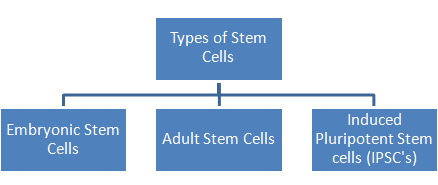
Types Of Stem Cells


There are several types stem cells found having there own characteristics.Out of which the details of few are mentioned below :


Embryonic Stem Cells
The embryonic  are the cells which are found inside the blastocyst stage of embryo and are are being harvested  from the the inner cells mass of blastocyst.

These cells can give rise to any kind of cell present inside the human body.(220 different types of cells are present inside human body )

Process of harvesting and differentiating the embryonic stem cells 
Reference : http://www.blurrent.com/article/11-unbelievable-signs-your-cat-is-embryonic-stem-cells-

There are certain ethical issues involves as it is considered that by harvesting the embronic stem cells which involves the destruction of the embryo ,we are killing a possible human life though these cells are having great therapeutic potential by the help of which one can save the life of dying human.


Adult Stem Cells
Adult stem cells are the cells which are found in all the individuals (Infant,children & adults) and are being harvested from already developed t in specific tissue ,

These cells can give rise to specialised cell present inside specific tissue or organ of the human body such as heart, brain , kidney , liver etc.

These stem cells basically supports :
  • Circulatory system
  • Nervous system
  • Respiratory System
  • Digestive system
  • Skeletal system
  • Muscular System

Process of harvesting and extracting adult stem cells
Reference :http://liveaction.org/blog/stem-cell-research-the-basics-types-of-research-medical-status-and-ethical-drawbacks

Nowadays , adult stem cells are the cells which are being used for the treatment of various kinds of diseases and mostly being used in case of bone marrow transplantation .And future possibilities for the treatment of several life threatening diseases is based these cells only.

Induced Pluripotent Stem Cells (IPSC's)
Induced pluripotent stem cells are adult, differentiated cells that hev been experimentally "reprogrammed" into a stem cell like state.

These cells can be made from readily available cells including fat, skin, and fibroblasts (cells that produce connective tissue).

Process of creating IPSC'S
Reference : http://learn.genetics.utah.edu/content/stemcells/quickref/

 The "reprogramming" process introduces genetic modifications, the safety of using iPS cells in patients is uncertain.

Sunday, 19 April 2015

Importance of Stem Cells


Stem cells are important as they are having great potential in the medical field .Stem cells can regerate and repair the damge tissue and for the same reason were being used from a longer period of time for bone marrow transplantation but now because of medical advancement in this field and various clinical trials these cells are being used for the treatment of various blood related and organ related diseases which comprises of leukemia,lymphoma,cancer,diabetes,hearing loss,vision loss etc.


Image Reference :http://usefulone.blogspot.in/2012/08/importance-of-stem-cells.html


Sunday, 12 April 2015

Introduction to Stem Cells

Stem Cells

Stem Cells are the basis cells of our body or we can say the master cells which plays a very crucial and beneficial role inside the human body.These are the cells which are undifferentiated means capable to differentiate into various specialised cells(220 different types) and have the ability to divide for a longer period of time.The stems cells which are capable to give rise to every kind of cells ,tissues and organs are found inside the embryo and are responsible for the development of foetus body .